Cast Iron vs Cast Steel Anvils: Which One’s Better?
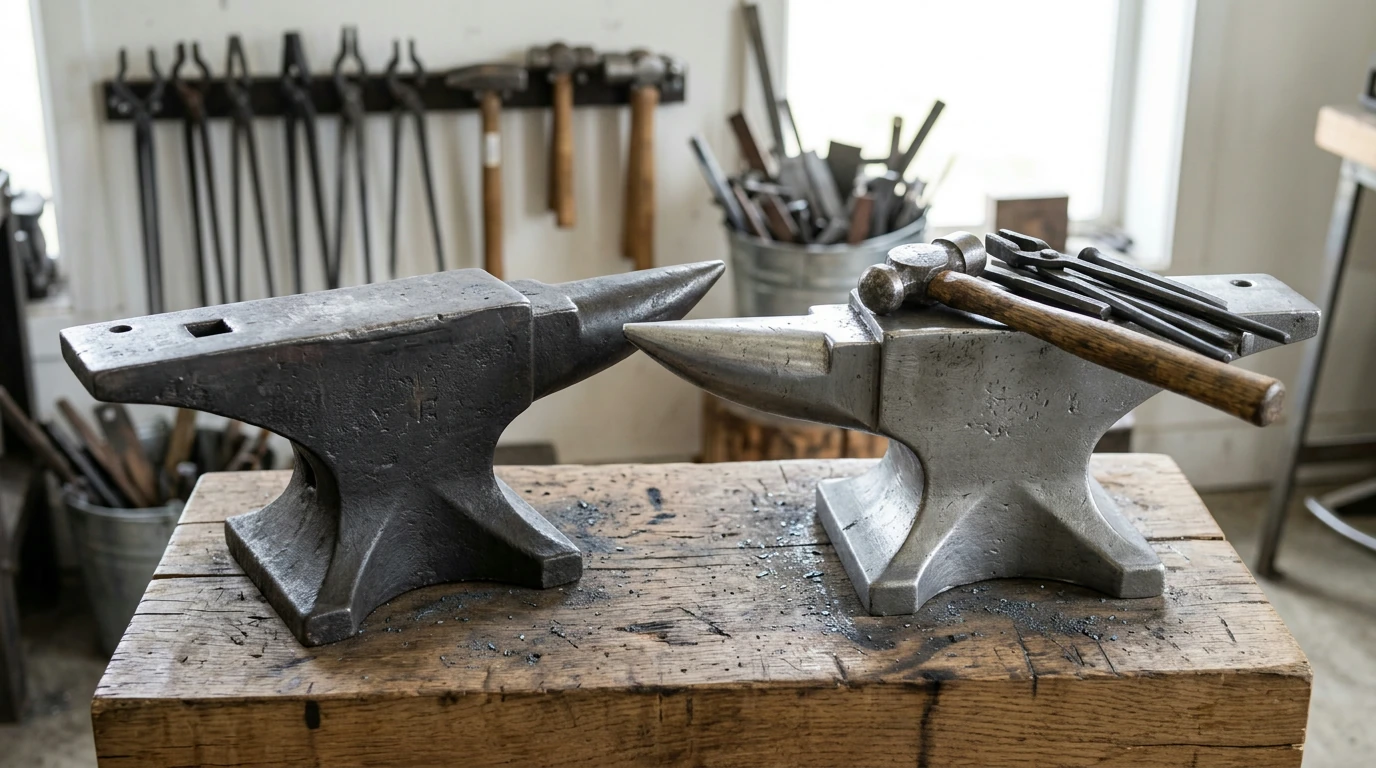
Which Type of Anvil Is Better, Cast Iron or Cast Steel?
Quick answer
For most smithing, a cast steel anvil is the better choice because it delivers higher rebound, better durability under repeated blows, and a more forgiving working surface for serious forging. Cast iron can work for light-duty shaping and hobby tasks, but it’s easier to chip and dent and typically loses energy with each strike.
Cast steel: why our team recommends it for forging
Cast steel anvils are built to take impact. You’ll notice more “liveliness” (rebound) when you strike hot steel, which means your hammering feels more efficient and less fatiguing over longer sessions. Cast steel also tends to resist edge damage better than cast iron, so the face stays usable for cleaner shoulders, better bevel control, and more consistent results on repeated projects.
If you’re shopping for a general-purpose anvil profile, our guide on cast steel single-horn anvils covers what to look for in a stable working shape and horn style: https://fredecong.com/guide-cast-steel-single-horn-anvil-round-horn-stable-base/
Cast iron: when it can be the right tool
Cast iron anvils are usually more budget-friendly and can be fine for light metalwork like basic bending, tapping, and occasional small hardware adjustments. If you’re not doing frequent forging blows—especially not with heavier hammers—cast iron can be a practical start. The tradeoff is lower rebound and a higher risk of cracking, chipping, or mushrooming at edges if you miss-hit or work too cold.
How to choose based on your work
If you plan to forge hot steel regularly, use heavier hammers, or want the anvil to last as your skills grow, choose cast steel. If you mainly need a benchtop striking surface for light shaping and you can keep blows controlled and centered, cast iron may be acceptable.
Safety and longevity tips
Whichever you choose, mount the anvil firmly so it can’t shift, keep your hammer faces smooth to reduce face damage, and avoid striking hardened steel directly on the anvil face. Wearing eye protection is essential—chips and scale can travel fast.
FAQ
How do I keep my anvil from walking on the stand?
Use a flat, solid stand and secure the anvil with brackets or a tight chain/strap system so it can’t creep under repeated blows. Adding a thin rubber or leather layer between the anvil and stand can also help damp vibration and improve grip.















Leave a comment