Stamp Care Checklist: Keep Albums Pristine for Decades
Timeless Stamp Treasures That Stay Pristine: A Collector’s Care Checklist for Long-Lasting Albums
A stamp collection can look “mint” for decades—or quietly lose value and beauty through avoidable handling, humidity, light, and storage mistakes. Our team put together a practical, collector-friendly care routine built around a printable checklist, so each stamp stays clean, flat, and confidently stored from the day you acquire it to the day you display it or pass it on.
What Makes Stamps Age Poorly (and What Prevents It)
Most “mystery damage” is actually predictable once you know the usual culprits:
- Humidity swings: Moisture can disturb gum, cockle paper, and invite mold; overly dry air can make paper brittle and mounts less forgiving.
- Light exposure: UV and strong indoor light gradually fade inks and can tone paper—especially on open display pages.
- Skin oils and pressure: Fingertips, rushed page turns, and tight mounts can create scuffs, thins, creases, and gum disturbance.
- Contaminants: Dust, food particles, smoke residue, and household aerosols settle into paper fibers and album surfaces.
- Poor materials: Non-archival plastics, acidic paper, and unknown adhesives can yellow, stick, or trigger chemical reactions over time.
A Simple Collector’s Toolkit (Keep It Together in One “Stamp Care” Box)
When supplies are scattered, handling tends to get rushed. We recommend keeping a dedicated kit so your process stays calm and consistent.
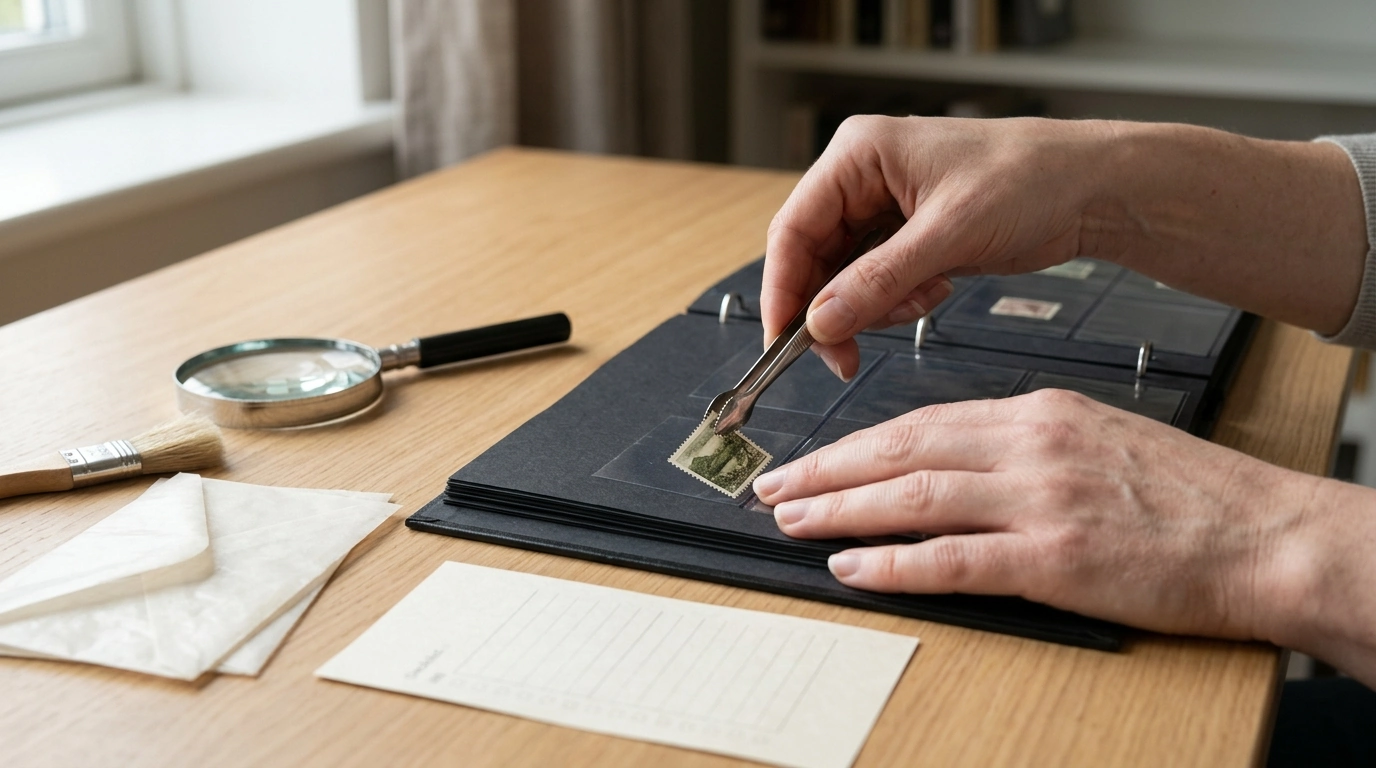
- Stamp tongs: Essential for loose stamps—protects edges, perforations, and gum.
- Archival stock pages or quality album pages: Stable paper and safe pockets/mounts reduce long-term risk.
- Stamp mounts or archival-safe glassine envelopes: Choose mounts for display and glassine for sorting or temporary holding.
- Magnifier + good lighting: Helps you catch hinge remnants, perf issues, toning, or early foxing before it spreads.
- Soft brush or bulb blower: For dusting album surfaces (not rubbing stamp faces) to keep debris out of pockets.
- A dedicated flat workspace: Clean and dry, with no food/drinks and minimal airflow to prevent stamps from lifting or blowing away.
How the Printable Checklist Keeps Collections Pristine
Good habits beat “once-in-a-while” overhauls. A checklist makes care repeatable—even when you’re busy—by turning best practices into a quick routine.
- Repeatable flow: Intake, inspect, store, review—so you’re not relying on memory.
- Separate steps for mint vs. used: Prevents gum disturbance and reduces accidental adhesion or abrasion.
- Prompts for risk moments: Purchasing lots, sorting duplicates, rehousing into new albums, and seasonal humidity changes.
- Condition flags: Note hinge remnants, toning, gum bends, or thin spots once, then avoid repeated handling.
- Inventory support: Consistent labeling and notes help with insurance documentation and a smoother handoff later.
If you want a ready-to-print routine, our team built Timeless Stamp Treasures That Stay Pristine | Printable Checklist for Collectors | Stamp Collection Care Tips & Preservation Guide to cover the intake-to-review cycle in a simple format you can keep right by your albums.
Storage Rules That Do the Heavy Lifting
Smart storage prevents most problems before they start.
- Pick a stable interior room: Avoid basements, attics, garages, and exterior walls where temperature and humidity swing.
- Store albums upright and supported: Prevent leaning stacks that compress pages and warp mounts.
- Block light: Keep albums closed in a cabinet or slipcase; avoid direct sun completely and limit display time.
- Avoid “unknown plastics”: Strong odors or sticky pockets are red flags—replace with archival-safe materials.
- Quarantine new acquisitions: Isolate new lots briefly to check for mold, pests, odor, or sticking before mixing them into your main collection.
Quick Guide: Safe Home Environment Targets for Stamp Storage
| Factor | Preferred Range | Practical Tip |
|---|---|---|
| Relative humidity (RH) | About 30–50% RH (steady matters most) | Use a small room hygrometer; address seasonal spikes with a dehumidifier in humid climates. |
| Temperature | Cool and consistent (avoid heat sources) | Keep away from radiators, vents, and electronics that warm shelves. |
| Light | Low light; no direct sun; limited display time | If displaying, rotate pages and store the album closed afterward. |
| Air quality | Clean, low-dust, smoke-free | Store in a closed cabinet; avoid scented sprays and cleaning aerosols nearby. |
| Contact materials | Archival-safe pages, mounts, and sleeves | When in doubt, replace older PVC-like plastics with archival polypropylene or polyester. |
Handling and Sorting: Fast Habits That Prevent Permanent Damage
A Collector’s Intake Routine for New Stamps (So Problems Don’t Spread)
A Maintenance Schedule That Fits Real Life
Where the Printable Checklist Fits Best in Your Workflow
If you also like keeping other home projects organized with printables, our team offers digital downloads such as Easy Holiday Potluck Bundle on a Budget – 3-in-1 Digital Download—a separate resource, but the same “keep it repeatable” approach that makes collecting routines easier to maintain.
Further Learning (Trusted References)
- Smithsonian National Postal Museum — Stamp Collecting Basics
- American Philatelic Society — Stamp Collecting resources
- Library of Congress — Care, Handling, and Storage of Paper
FAQ
Should stamps be stored in plastic sleeves or mounts?
They can be, as long as the sleeves or mounts are archival-safe, non-reactive, and properly sized so stamps aren’t stressed or squeezed. Avoid unknown plastics that feel sticky or smell strong, and don’t use materials that can trap moisture against paper.
What’s the safest way to handle mint stamps with gum?
Use stamp tongs, handle as little as possible, and keep conditions steady so gum isn’t tempted by humidity swings. Store mint separately from used and avoid pressure, friction, and contact with questionable plastics.
How often should a stamp collection be checked for humidity or damage?
A quick monthly scan catches early curling, sticking, or spotting, while seasonal check-ins help you respond to humidity changes. Plan an annual review to replace aging mounts/pages and refresh your documentation.
















Leave a comment