Everyday Signs of Secure Attachment in Kids (By Age)
Spotting Secure Attachment in Kids: Everyday Signs That Your Connection Is Working
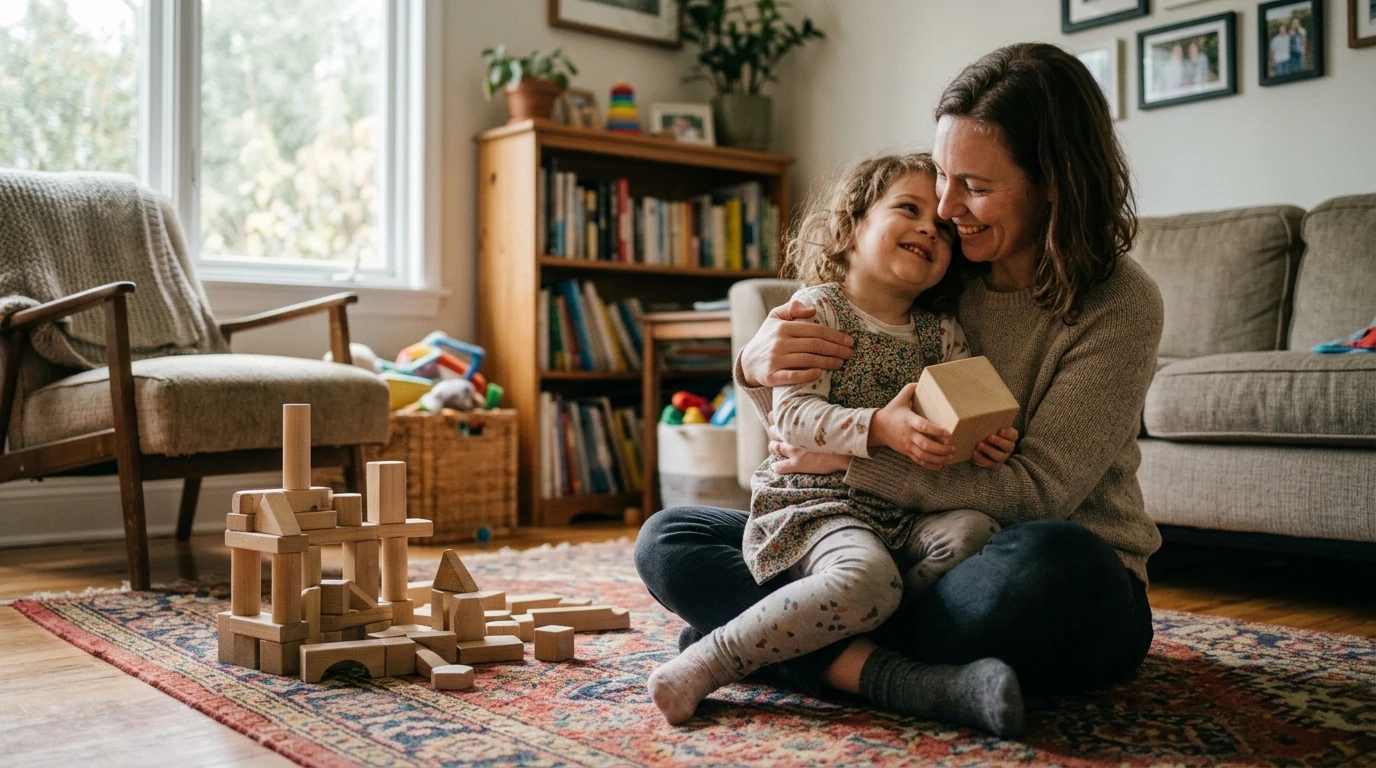
Secure attachment is not a “perfect parenting” badge—it’s the steady pattern of safety, comfort, and confidence that builds when a child learns: “My grown-up comes back, helps me when I’m overwhelmed, and likes being with me.” In real homes, secure attachment shows up in ordinary moments: a glance across the room, a quick hug after a tumble, a fierce “NO!” followed by a return for cuddles at bedtime.
Below, our team breaks down practical ways you can recognize secure attachment in your child, what those behaviors often mean, and simple routines that support your connection without turning every day into a test. For a printable, quick-reference version you can revisit during busy seasons, we also offer our Spotting Secure Attachment in Kids (digital download).
What secure attachment looks like in daily life
Secure attachment tends to look like a flexible balance: your child comes close when they need you, and they move outward when they feel safe enough to explore.
- Comfort-seeking that makes sense: your child checks in, asks for help, or comes close when tired, scared, hurt, or uncertain.
- Confidence to explore: after a brief check-in, your child returns to play, learning, or social interaction—using you as a “home base.”
- Recovery after big feelings: meltdowns happen, but repair happens too—your child can calm with your support and then re-engage.
- Real closeness, not constant clinginess: a securely attached child may be independent at times and very needy at others, depending on stress and development.
- Relationship flexibility: your child can accept comfort from a trusted caregiver (grandparent, teacher, sitter), even if they still prefer you most.
Secure attachment: quick signposts to notice (and what they usually mean)
| What you might observe | What it often signals | How to respond in the moment |
|---|---|---|
| Child looks back at you during play or in a new place | They’re checking safety while staying engaged | Offer a warm glance, a nod, or brief words: “I’m right here.” |
| Child brings problems to you (a broken toy, a social conflict) | They expect help and guidance | Validate, then coach: “That’s frustrating. Let’s figure it out.” |
| Child accepts comfort after a fall, then returns to play | They can use you to regulate and then re-explore | Soothe first, then encourage: “You’re okay—go try again when you’re ready.” |
| Child protests at separation but settles with a routine | Bond is strong and predictability helps | Keep goodbye short and consistent; reunite warmly. |
| Child can disagree with you without fearing loss of connection | They trust the relationship can handle limits | Hold the boundary and keep connection: “No hitting. I’ll help you be safe.” |
The “secure base” pattern: connection → exploration → return
A helpful lens is the repeating cycle of secure attachment. Instead of analyzing one intense afternoon, watch for the pattern over time:
- Connection: your child seeks proximity through eye contact, conversation, touch, or simply being near you.
- Exploration: your child takes age-appropriate risks—trying, learning, socializing, playing—because safety is available.
- Return: your child circles back for reassurance, refueling, or co-regulation, especially during transitions like drop-off, bedtime, or unfamiliar places.
One clingy week, one tough school drop-off phase, or one hard season doesn’t define your bond. Repeated cycles of “I need you → you help → I can go again” are the signposts that matter.
Age-by-age ways secure attachment can show up
Common worries that don’t automatically mean attachment problems
Practical habits that strengthen secure attachment (even on messy days)
Using the digital guide in real life: quick routines, checklists, and reflection
When life is busy, it helps to make attachment support doable. Our Spotting Secure Attachment in Kids (digital download) is designed for fast check-ins: pick one setting (mornings, meals, homework, or bedtime), notice trends instead of isolated incidents, and use shared comfort-and-boundary phrases if you co-parent.
If your family is building more predictable meal routines as a daily “connection anchor,” our Porcelain Dinnerware Set can support that practical goal—because consistency is easier when the basics of daily life feel a little more set up.
And if your household is in a transition season where logistics add stress, our team also keeps tools like Is Carsharing the Right Choice for You on hand, since calmer systems often make calmer parenting possible.
For additional trustworthy background reading, you can explore resources from the American Academy of Pediatrics, the American Psychological Association, and ZERO TO THREE.
FAQ
Can a child be securely attached and still have frequent tantrums?
Yes. Secure attachment is about the pattern of your child seeking comfort, receiving support, and returning to exploration over time; tantrums often reflect developing skills, temperament, or stress. In the moment: validate the feeling, hold the limit, co-regulate with you nearby, then repair once calm.
What are simple signs my child trusts me as a safe base?
Look for check-ins during play, bringing problems to you, accepting comfort, recovering after conflict, and re-engaging with the world. Consistency across weeks and contexts matters more than any single tough day.
How do I support secure attachment during separations like daycare drop-off?
Use a predictable goodbye routine, keep your exit short and confident, consider a transitional object, and create a warm reunion ritual. Protesting at separation can be healthy; settling with a trusted caregiver and reconnecting with you afterward are key signs the system is working.
















Leave a comment