House Bunk Bed: Twin-Over-Twin with Roof & Windows
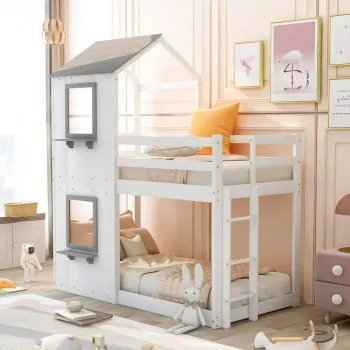
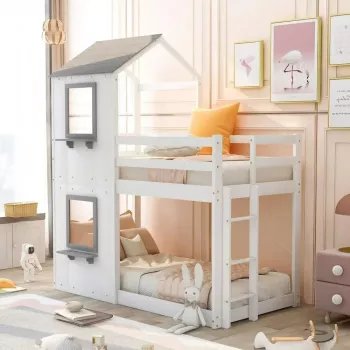
A Room-Saving House Bunk Bed That Feels Like Their Own Little Hideaway
When two kids share a room (or one kid needs a big imagination zone in a small footprint), the right bunk bed does more than stack sleep spaces—it organizes the room, supports routines, and makes bedtime easier to look forward to. Our Wooden Twin Over Twin House Bunk Bed with Roof, Windows & Ladders for Kids brings a playful “house” silhouette together with the everyday practicality families need: two twin sleeping areas, built-in ladders, and design details that help the bed feel like a cozy, lived-in part of the room rather than a bulky add-on.
Why the house-frame design works for real life
A house-frame bunk isn’t only about style—it creates structure in a busy room. The “roofline” gives the bed a defined boundary, which can reduce the visual sprawl that sometimes happens when one piece of furniture dominates the space.
- It creates a clear sleep zone and a separate play/quiet zone without adding extra furniture, which helps shared rooms feel calmer.
- The roof and window cutouts bring a storybook look that blends naturally with themed decor or simple, neutral rooms.
- It can make transitions—nap time, lights-out, independent sleep—feel more inviting because the bed reads as a personal nook, not just a frame.
- The outline also works as a backdrop for soft lighting or a reading-corner vibe—just keep anything decorative away from climbing paths.
Twin-over-twin: a smart layout for siblings, sleepovers, and growing kids
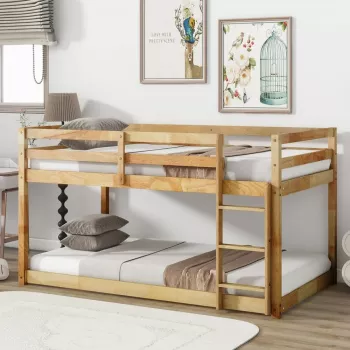
Twin-over-twin bunks are a flexible “long game” choice. You’re not committing to mismatched mattress sizes, and you can keep bedding consistent between bunks when you want laundry to be simple.
- Two twin beds cover a wide range of ages—from early big-kid transitions through the teen years—without forcing an early upgrade.
- Twin mattresses and bedding are easy to shop for, rotate, and replace, which helps when you want a backup set ready to go.
- Stacking frees up floor space for dressers, toy storage, desks, or a play mat—often the difference between cramped and functional.
- It’s sleepover-friendly: both sleep surfaces can be used while the room still feels navigable.
Everyday planning checklist for a bunk bed setup
| What to plan | What to measure or decide | Why it matters |
|---|---|---|
| Ceiling clearance | Distance from top bunk mattress surface to ceiling | Helps prevent head bumps and keeps the top bunk comfortable for sitting up |
| Wall placement | Choose a corner or wall-side position when possible | Reduces open-side exposure and keeps the room’s traffic path clear |
| Lighting | Night light location and switch access | Supports safer nighttime movement and calmer bedtime routines |
| Storage flow | Where pajamas, books, and a hamper will go | Cuts down clutter around ladders and landing zones |
| Bedding choices | Low-profile pillows and tidy blankets for the top bunk | Helps keep bedding from spilling into climbing areas |
Ladders and movement: keeping climbs predictable
Kids do best when “how to get in and out” is consistent. Built-in ladders help make that routine automatic—especially helpful during sleepy mornings or nighttime bathroom trips.
- Give the ladder side a clear landing zone. Avoid toy bins, rolling carts, or sharp-edged furniture in the climb path.
- Keep a simple “one at a time” ladder rule, and skip slippery socks during bedtime climbs.
- Reduce repeat up-and-down trips by adding a small, designated spot for bedtime books and a water bottle (a basket or wall hook works well).
- Make nighttime navigation easier with a gentle night light that doesn’t shine directly into either bunk.
Windows, roof lines, and the little details kids actually use
The details kids interact with are rarely the ones adults expect. A house-frame bunk’s “windows” and outline often become the everyday anchor points for play, conversation, and winding down.
- Window cutouts add personality without requiring extra decor—helpful when you want the room to stay simple and easy to reset.
- The house outline creates natural zones: imagination during the day, a cozy boundary at night.
- In shared rooms, the defined frame can help each child feel like they have a distinct space, which can reduce bedtime negotiation.
- If you add hanging accessories, keep them lightweight and away from ladders, and avoid anything that can snag during climbs.
Safety habits that matter more than extras
For additional safety guidance and standards, you can review resources from the U.S. Consumer Product Safety Commission (CPSC) and ASTM International.
Making it feel like their space (without making mess their default)
A quick comparison for planning the rest of the room
And if you’re coordinating multiple spaces in your home, matching everyday essentials can make routines smoother. For example, setting up a streamlined kitchen routine alongside a kid-friendly bedroom reset can reduce end-of-day pileups—our Porcelain Dinnerware Set is a simple way to keep weekday meals feeling organized without overcomplicating storage.
FAQ
What age is appropriate for the top bunk?
Many general safety guidelines recommend the top bunk for children ages 6 and up, but readiness matters most. If your child reliably follows climbing rules, uses the ladder carefully, and stays calm on the top bunk, the setup tends to work better day to day.
Do standard twin mattresses fit a twin-over-twin bunk bed?
Yes—twin-over-twin bunks are designed for standard twin mattresses. Just keep mattress thickness in mind so the top bunk’s guardrail remains effectively positioned above the mattress surface.
How can the room be arranged to make ladders safer?
Place the bed so the ladder has a clear landing zone, and use a wall-side or corner position when possible. Add a night light for visibility and keep toys, bins, and movable furniture out of the ladder path.











Leave a comment