Calming Hobbies for Stress Relief: Easy Ideas That Stick
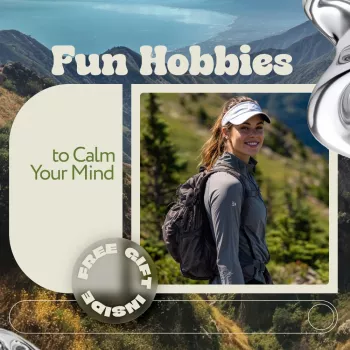
Fun Hobbies to Calm Your Mind: Everyday Activities for Stress Relief and Mental Wellness
A calming hobby can act like a pressure valve for busy days—shifting attention away from worry loops, grounding the body, and creating small moments of control and enjoyment. The best choices are simple to start, easy to repeat, and flexible enough to fit real schedules. Below are relaxing hobby ideas (including quick “micro-hobbies”) plus a practical way to choose what will actually stick.
Stress can show up as racing thoughts, tight shoulders, shallow breathing, and irritability—real body signals, not just “in your head.” For a quick overview of how stress affects the body, see the American Psychological Association and the Mayo Clinic.
What Makes a Hobby Calming (and Why Some “Relaxing” Activities Don’t Work)
- Gentle absorption beats intense concentration. The sweet spot is enough focus to interrupt rumination, without turning into a performance. Think “steady hands” over “high stakes.”
- Low-friction setup matters more than motivation. When stress is high, a hobby with fewer tools and fewer steps is more likely to happen. A clear “start” (open notebook, grab yarn, put on shoes) is a hidden superpower.
- Look for a satisfying feedback loop. Visible progress (a page filled, a plant watered, a chord practiced) helps the brain downshift because it signals completion and control.
- Watch for hidden stressors. Constant comparison, complicated purchasing rabbit holes, or strict schedules can backfire during demanding weeks. If the hobby creates guilt, it’s not serving you.
A Quick Menu of Calming Hobbies (Choose by Mood and Energy)
- For a racing mind: puzzles, knitting/crochet, adult coloring, or a focused playlist plus simple sketching. Steady attention can quiet mental chatter.
- For a tense body: gentle yoga, short stretching routines, tai chi, or mindful walking. Movement supports nervous-system regulation without needing “workout energy.”
- For emotional overload: journaling, watercolor washes, collage, or baking something familiar. Comfort plus expression—without needing the “right words.”
- For social stress: solo-friendly hobbies like reading, gardening, or model building; community can be optional later (a book club, craft night, local class).
- For screen fatigue: hands-on hobbies such as clay, cooking, basic woodworking, or simple home projects. Tactile work often feels restorative fast.
10-Minute Micro-Hobbies for Busy Days
- Breathing + tea ritual: Prepare a warm drink and pair it with 3 minutes of slow breathing. Habit stacking makes it easier to repeat.
- One-song reset: Put on a single song and do one small task (fold laundry, tidy one drawer, stretch, or doodle) until it ends. A built-in “stop time” prevents overthinking.
- Pocket journaling: Write “3 lines only”: what happened, what’s felt, one next step. Short entries are often more sustainable than long ones.
- Mini nature break: Step outside and deliberately notice 5 things seen, 4 heard, 3 felt, 2 smelled, 1 tasted. It’s grounding and screen-free.
- Desk craft: Keep a tiny kit (colored pencils, small puzzle, origami paper) to replace doom-scrolling with a calmer default.
Relaxing Creative Hobbies (Low Pressure, High Comfort)
- Drawing and doodling: Focus on lines, shapes, and patterns rather than “talent.” Repetition is the calming feature.
- Coloring and paint-by-number: Structured creativity reduces decision fatigue and is easy to pick up midweek.
- Music for mood regulation: Learn a few chords, practice a short warmup, or sing along. Small routines beat big goals on stressful days.
- Writing without judgment: Try prompts like “What do I need today?” or “What can wait?” to keep journaling practical, not performative.
- Handmade gifts: Simple cards, bookmarks, or small crafts add meaning without requiring intense time or cost.
If you want a structured, low-overwhelm way to explore options, Fun Hobbies to Calm Your Mind – A Practical Guide to the Best Hobbies for Stress Relief, Mental Wellness, and Everyday Relaxation offers quick-start ideas and a simple routine you can repeat when life gets busy.
Mindful Movement Hobbies That Don’t Feel Like Exercise
Calming Home Hobbies: Comfort, Routine, and Small Wins
Turning dinner into a quiet ritual can be surprisingly grounding. A dedicated set like the Porcelain Dinnerware Set makes it easier to repeat a simple “set the table, eat slowly, reset the kitchen” routine—without waiting for a special occasion.
Pick the Right Hobby: Time, Budget, Space, and Stress Level
Calming Hobbies at a Glance
| Hobby | Best for | Time to start | Cost level | Space needed |
|---|---|---|---|---|
| Coloring / sketching | Quiet focus, screen breaks | 5–10 min | Low | Small |
| Journaling | Sorting thoughts, emotional release | 5 min | Low | Small |
| Mindful walking | Tension relief, mood reset | 10–20 min | Low | None (outdoors) |
| Gardening / plants | Routine, gentle movement | 10–30 min | Low–Medium | Small–Medium |
| Baking simple recipes | Comfort, structure, sensory calm | 30–60 min | Medium | Kitchen |
| Knitting / crochet | Repetitive soothing motion | 10–20 min | Low–Medium | Small |
Making a Hobby Stick: A Simple 2-Week Calm Plan
For nights or weekends when you want a comforting “make something and share it” routine, the Easy Holiday Potluck Bundle on a Budget – 3-in-1 Digital Download can help turn cooking into a low-stress, repeatable plan instead of another decision-heavy task.
FAQ
What if a hobby feels frustrating instead of relaxing?
Reduce the difficulty and shorten the session, then switch to a more repetitive, low-stakes version of the same activity. Early learning curves can raise stress, so focus on the process (showing up) rather than the outcome, and change activities if it keeps spiking frustration.
How many times a week should a calming hobby be done to notice a difference?
Small consistency usually beats long sessions—aim for about 10–20 minutes, 3–5 days per week. Track mood before and after for a couple weeks to see what frequency actually helps.
What are the best calming hobbies that don’t require supplies?
Mindful walking, stretching, breathwork, intentional music listening, and body-scan relaxation are all supply-free. If you want journaling without buying anything, any scrap paper works—keeping it short helps you avoid reaching for screens.










Leave a comment