Wood Cat Climbing Frame Guide: Placement, Setup, Tips
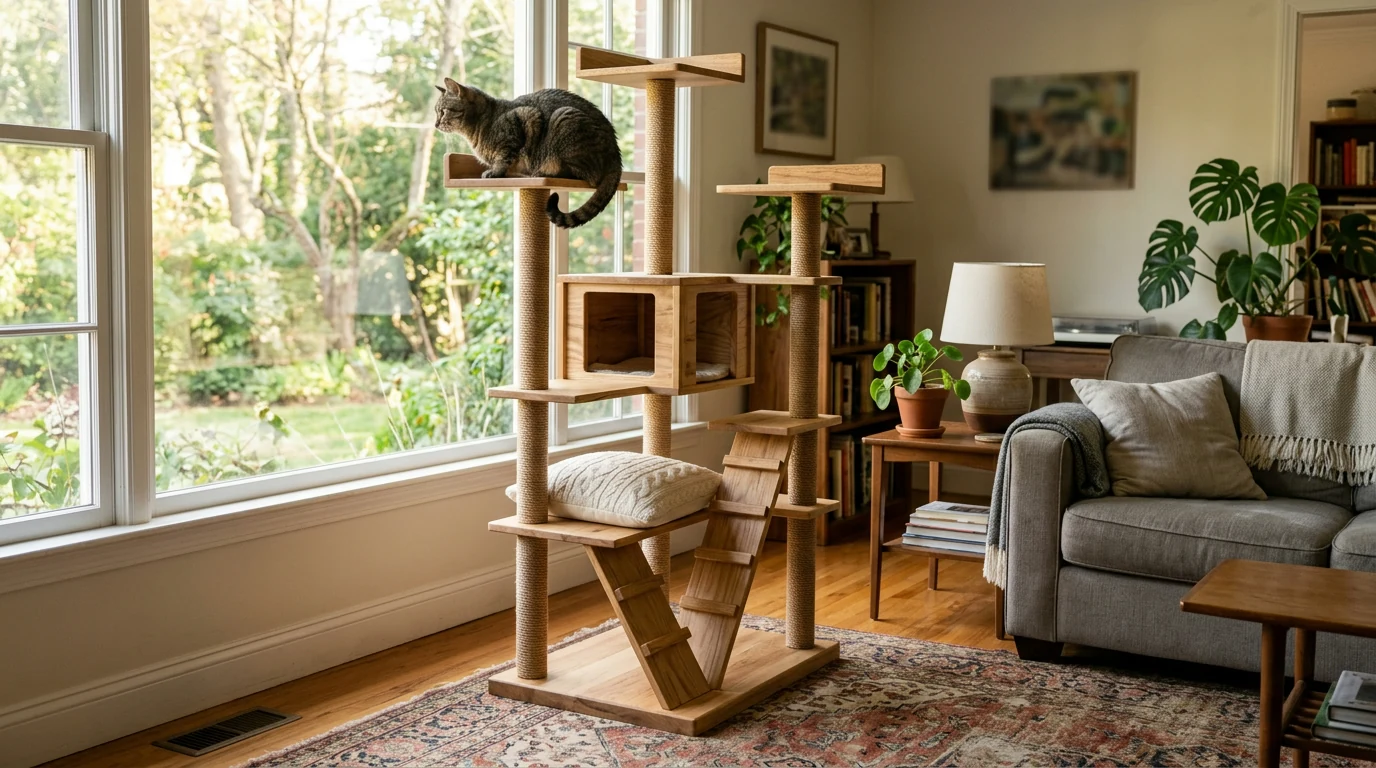
Wood Cat Climbing Frame: A Natural-Look Vertical Playground for Confident Jumpers and Cozy Loungers
Cats thrive when your home gives them vertical space to climb, observe, and nap in peace. A wood cat climbing frame brings that “cat highway” feeling indoors with a warm, furniture-like look—helping active cats burn energy and shy cats find safe, elevated retreat spots. Our team put together this guide to show what a climbing frame adds to day-to-day cat life, where it fits best in a room, and how to set it up for steady, stress-free use.
Why vertical space changes a cat’s day
Height isn’t just “extra” for cats—it’s part of how they feel secure and in control of their surroundings. Adding vertical options can shift the mood of an entire home, especially for indoor cats and multi-cat households.
- Supports natural instincts: climbing, perching, scanning, and choosing distance from household traffic.
- Encourages movement that feels like play: cats are more likely to hop, stretch, and explore than they are to “exercise on schedule.”
- Creates options in multi-cat homes: higher routes and resting zones can reduce crowding at floor level.
- Adds a predictable “safe place”: a reliable perch can become part of a soothing routine (post-meal naps, quiet-time observation).
If you’d like the veterinary behavior perspective on why environment matters so much, the AAFP Feline Environmental Needs Guidelines and the ASPCA’s enrichment guidance are both excellent references.
What a wood cat climbing frame adds that standard cat furniture often doesn’t
A climbing frame can be more than a “cat item in the corner.” Wood styling and clear, step-by-step routes help many cats use it more confidently—and help you keep it in the rooms you actually live in.
- Home-friendly finish: wood tones tend to blend with living-room and bedroom furniture rather than looking purely utilitarian.
- Stable feel underfoot: many cats prefer platforms that don’t wobble when they launch or land.
- Clear routes up and down: a predictable path reduces hesitation for cautious climbers.
- Defined zones: separate levels make it easier to create “lookout,” “lounging,” and “play” areas.
- Long-term placement potential: when a piece looks intentional, it’s easier to keep it in a main room (which makes it more useful to your cat).
Placement that makes it instantly more useful
Where you place a climbing frame often matters more than how tall it is. The goal is to make it feel like part of your cat’s existing routes—while keeping takeoffs and landings comfortable.
- Near a window: pair height with a view for birdwatching and sun naps.
- Along an existing pathway: place it where your cat already travels (living room edge, hallway opening) so it becomes part of the daily loop.
- A few steps from a “launch point”: positioning near a sofa or sturdy chair can help your cat transition up gradually.
- Away from startle zones: avoid loud doors, clanking vents, or places where people rush past.
- Give landing room: leave open floor space on at least one side so jumps feel controlled instead of cramped.
Room-by-room placement ideas
| Room | Best spot | Why it works | Simple add-on |
|---|---|---|---|
| Living room | Near a window or beside the sofa | Turns the social space into a shared hangout while giving your cat height | A small toy basket nearby for quick play sessions |
| Bedroom | Corner with a sightline to the bed | Offers a calm perch and a quiet retreat | A soft throw on one platform for extra coziness |
| Home office | Behind or beside the desk | Gives your cat a place to be close without walking across the keyboard | A treat tin for rewarding calm settling |
| Multi-cat home | Between two favorite areas | Creates a vertical “buffer” route that reduces face-to-face tension | Duplicate water access elsewhere to prevent guarding |
Helping cats use the climbing frame from day one
Some cats leap up immediately. Others need permission and predictability. A gentle “onboarding” plan builds trust in the structure and prevents frantic, slippery zooms.
Keeping it clean, calm, and cat-approved
For more on creating a home layout that supports calm, confident behavior, International Cat Care’s home environment advice is a helpful read.
A simple routine that pairs well with a climbing frame
Wood Cat Climbing Frame: product page and quick buying notes
If you’re ready to add a natural-look vertical option, you can view our Wood Cat Climbing Frame here.
While you’re setting up your space, you can also browse a couple of other in-stock home picks from our store: Porcelain Dinnerware Set and Is Carsharing the Right Choice for You.
Check today’s price and availability for the Wood Cat Climbing Frame.
FAQ
How tall should a wood cat climbing frame be for an indoor cat?
Choose a height your cat can reach using steady, incremental steps rather than a single big leap, especially if your cat is cautious or older. A comfortable top perch is one your cat can access confidently and exit without needing a risky jump down, and stability matters more than maximum height.
Where is the best place to put a cat climbing frame in a small apartment?
Place it near a window-adjacent corner, beside a sofa, or along a wall your cat already passes so it becomes part of daily movement. Leave landing space on at least one side and avoid spots right next to loud doors or high-traffic “startle” zones.
How can a climbing frame help in a multi-cat home?
It adds vertical separation so cats can share a room without being forced into close contact at floor level. Multiple levels create escape routes and reduce bottlenecks, and it works best when paired with multiple resources (resting spots and water access) so one cat can’t control everything.














Leave a comment