Adjustable Dry Line Field Marker: Big Hopper, Metal Wheels
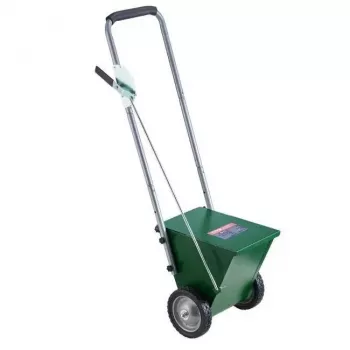
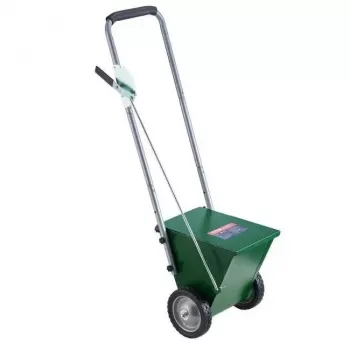
Adjustable Dry Line Field Marker with Large Powder Capacity & Metal Wheels
Clean, visible lines help games start on time and keep play organized. An adjustable dry line field marker is a practical choice for schools, parks, and clubs that need consistent striping on grass or dirt with minimal setup, predictable material use, and durable rolling performance. For facilities juggling multiple sports and rapid turnarounds, the right marker can make layout work faster, straighter, and easier to repeat week after week.
What a dry line field marker does
A dry line field marker dispenses dry marking powder in a controlled stream to create straight, high-contrast lines on athletic surfaces. It’s a straightforward solution when wet paint systems are unnecessary, inconvenient, or slow to deploy.
- Dispenses dry marking powder in a controlled stream to create straight, high-contrast lines on athletic surfaces.
- Works well for routine layouts and touch-ups on fields where wet paint systems are unnecessary or impractical.
- Common uses include sidelines, baselines, batter’s boxes, coach’s boxes, and multi-sport re-marking during busy schedules.
For general guidance on maintaining safe, playable natural grass surfaces, the Sports Turf Managers Association (STMA) Resource Library is a helpful reference point for field care routines that support better line quality.
Why adjustability matters on busy fields
Not every field needs the same stripe. Adjustable line width helps one marker cover multiple sports, age groups, and visibility expectations without keeping separate tools in the shed.
- Adjustable line width supports different sports and league requirements without needing separate equipment.
- Narrow settings help conserve powder for practice fields and quick refreshes; wider settings improve visibility for game-day striping.
- A stable adjustment mechanism reduces uneven edges caused by shifting settings while walking.
Typical line-width needs by use case
| Use case | Preferred line width | Why it helps |
|---|---|---|
| Practice touch-ups | Narrow to medium | Uses less powder while keeping boundaries readable |
| Game-day marking | Medium to wide | Improves visibility for players, officials, and spectators |
| Multi-sport shared fields | Variable | Enables quick changes between layouts without changing tools |
If your organization follows specific sport rules for field layout and boundary markings, review your governing body’s guidance before finalizing line widths and placement. For baseball-specific resources, see NFHS baseball rules and interpretations (general guidance).
Large powder capacity: fewer refills, more consistent lines
Refilling mid-stripe is where straight lines go to die. A large-capacity hopper helps crews finish long sidelines and outfield runs without stopping, which supports cleaner tracking and more uniform application from start to finish.
- A larger hopper reduces downtime from refilling during long layouts or multiple fields back-to-back.
- More consistent feed improves line continuity, especially on longer sidelines and outfield boundaries.
- Better for crews managing multiple diamonds/rectangles in a single session, where refill stops can disrupt straight tracking.
For venues that mark several fields in one morning, a consistent feed rate also helps powder usage become more predictable over time, making it easier to estimate how much product to bring to the complex.
Metal wheels for smoother tracking and durability
Wheel quality matters more than it seems. Wheels that roll predictably make it easier to hold a line when the surface changes from lush turf to worn goal mouths, or when a dirt warning track transitions into grass.
- Metal wheels tend to roll predictably and resist deformation, supporting straighter lines on uneven ground.
- Added weight can improve contact and reduce “bounce,” which helps keep edges clean when walking at a steady pace.
- Durable wheel construction supports repeated use on mixed surfaces such as compacted dirt paths and turf transitions.
On windy days, the best “wheel upgrade” is still good technique: keep the marker close to the ground, maintain a steady pace, and avoid sudden accelerations that can scatter powder.
Step-by-step: getting crisp lines with a dry marker
Powder handling and cleanup
For general product-handling and safety references when evaluating facility supplies, the EPA Safer Choice program is a useful starting point.
Maintenance checklist for reliable dispensing
Quick troubleshooting guide
| Issue | Likely cause | Quick fix |
|---|---|---|
| Line looks faint or broken | Powder bridging/clumping or low hopper level | Break up clumps, refill, and keep powder dry |
| Line edges look ragged | Inconsistent walking pace or unstable adjustment | Slow down, keep steady pace, re-check width setting |
| Marker pulls to one side | Wheel tracking/alignment issue or uneven ground | Check wheel hardware and choose the smoothest path |
When a dry marker is the right choice (and when it isn’t)
Available products
- Adjustable Dry Line Field Marker with Large Powder Capacity & Metal Wheels ($163.32)
- Easy Holiday Potluck Bundle on a Budget – 3-in-1 Digital Download ($288.99)
- Porcelain Dinnerware Set ($99.01)
FAQ
How long do dry powder lines last on a field?
It depends on weather, irrigation, mowing, and traffic. Dry lines usually need more frequent touch-ups than paint, especially after rain or heavy play.
What’s the best way to keep powder from clogging in the hopper?
Keep powder sealed and dry, break up clumps before filling, and empty the hopper after use in humid conditions. Cleaning the dispensing openings prevents compacted powder from causing uneven flow next time.
Do metal wheels damage turf or dirt infields?
With steady handling and normal field firmness, metal wheels typically won’t damage turf or infields. Avoid sharp turns in place and don’t operate on overly soft, waterlogged ground where ruts are likely.















Leave a comment