Pet Choking Prevention & First Aid (Dogs, Cats, AI Help)
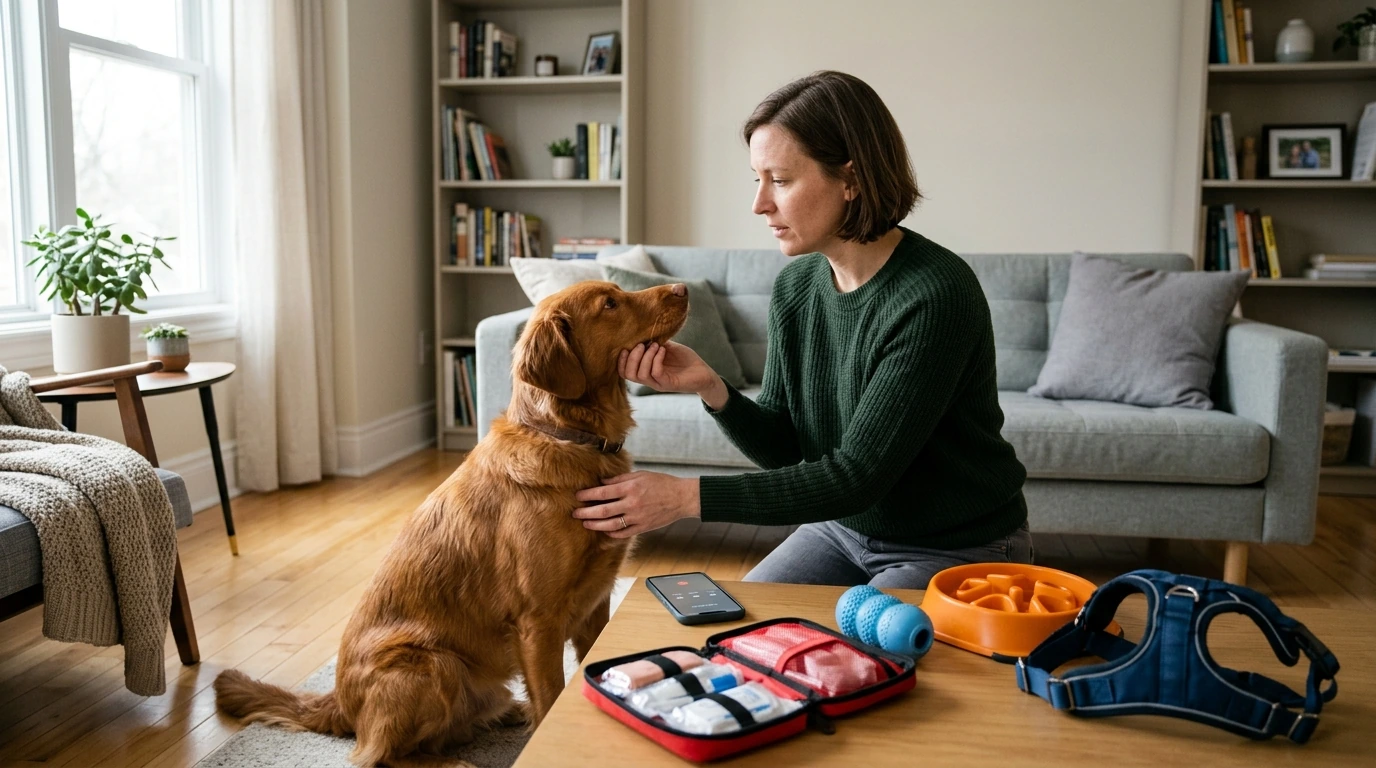
When Pets Can’t Breathe: Choking Prevention, First Aid, and AI Support for Pet Owners
Breathing emergencies can escalate in seconds. Knowing how to prevent choking, recognize warning signs early, and act safely can buy critical time until a veterinarian can take over. This guide covers everyday risk reduction, step-by-step first aid basics for dogs and cats, and how AI support can help owners stay organized and calm during high-stress moments. For more guidance, see RECOVER Guidelines: First Aid in Dogs and Cats. Evidence … – PMC.
What choking looks like in pets (and what it can be confused with)
Choking often starts suddenly—especially during chewing, play, or scavenging. Common clues include abrupt coughing or gagging, pawing at the mouth, noisy or high-pitched breathing, panic, blue/gray gums, or collapse. Any sign of blue/gray gums or open-mouth breathing in a cat should be treated as an emergency. For further reading, see and Consensus-Based First Aid Guidelines for Dogs and Cats.
Not all coughing is choking. Reverse sneezing, kennel cough, feline asthma, tracheal collapse (often in small dogs), heart disease, and even poisoning can look similar at first. When breathing looks difficult, the safest assumption is that it’s urgent: call an emergency clinic, prepare to transport, and keep handling to a minimum.
Safety matters. A frightened, oxygen-starved pet may bite or thrash. Use calm restraint, avoid yelling, and don’t force the mouth open if it increases stress or puts you at risk.
| What you notice | Possible cause | Safest immediate action |
|---|---|---|
| Gagging, pawing at mouth, sudden distress after chewing or playing | Choking/airway obstruction | Check mouth only if safe; if object visible and easy to grasp, remove; if not, begin appropriate first aid and head to emergency vet |
| Repeated snorts/honks, extended neck, then resolves quickly | Reverse sneezing | Keep pet calm; gently massage throat or briefly cover nostrils; monitor and call vet if frequent or worsening |
| Open-mouth breathing in a cat, fast belly breathing, blue gums | Respiratory distress (asthma, heart disease, fluid, severe stress) | Minimize handling; keep cool and quiet; go to emergency vet immediately |
| Coughing fits in small dog, worse with excitement or leash pressure | Tracheal collapse | Switch to harness, keep calm; veterinary evaluation urgently if breathing effort increases |
| Drooling, tremors, collapse, possible toxin exposure | Poisoning | Call poison control/vet immediately; do not induce vomiting unless instructed |
Prevention that actually works at home, on walks, and in the car
Most choking scares are preventable with a few routines that match your pet’s habits.
- Right chew, right size: Choose chew items that fit your pet’s mouth and chewing strength. Discard damaged toys and avoid brittle bones or splinter-prone chews.
- Slow down fast eaters: Use puzzle feeders, slow-feeder bowls, smaller portions, and supervision during meals—especially with “gulpers” that barely chew.
- Control the environment: Keep high-risk items out of reach: rubber bands, kids’ toys, corn cobs, grape stems, needles, string, small balls, and anything that can lodge in the throat.
- Walk smart: A properly fitted harness reduces airway pressure. Train “leave it” and don’t allow scavenging from sidewalks, parks, or trash areas.
- Car safety: Secure pets in a crate or crash-tested harness so they can’t scramble, panic, or chew unsafe items during travel.
Immediate steps before first aid: assess, call, and prepare to move
Before attempting anything hands-on, take a two-second snapshot: is your pet responsive, is the chest moving, can you hear airflow, and what color are the gums (healthy pink vs. pale/blue/gray)? If the pet is conscious but struggling, keep the head and neck aligned and avoid compressing the throat.
First aid for choking in dogs: safe basics and common mistakes
After any choking event, veterinary evaluation is still important. Airway swelling, aspiration pneumonia, and throat injury can show up later as coughing, noisy breathing, lethargy, fever, or reduced appetite over the next 24–48 hours. For practical, printable checklists that are easier to follow under stress, keep a copy of When Pets Can’t Breathe: A Life-Saving Guide for Pet Owners – Choking Prevention, First Aid, and AI Support accessible on your phone.
First aid for choking in cats: why speed and gentleness matter
Building a pet breathing-emergency kit and a simple home plan
How AI support can help during and after an emergency
AI has limits. It’s not a veterinarian and can’t replace hands-on assessment, oxygen therapy, imaging, or sedation for safe removal. Used well, it supports organization, calm guidance, and documentation while professional care is arranged. If transportation planning is a recurring challenge, a separate practical resource like Is Carsharing the Right Choice for You – Practical Guide Exploring for Smarter, Cheaper, Greener Transportation Decisions can help households think through backup ride options ahead of time.
Using the guide as a practice tool (so it’s familiar when seconds count)
Trusted external resources
FAQ
Should a finger sweep be used if a pet is choking?
No—blind finger sweeps can push an object deeper and can tear delicate tissue, especially if your pet jerks or bites. Only remove something if it’s clearly visible and easy to grasp, and prioritize contacting an emergency veterinarian.
What should be done after a pet seems fine following a choking scare?
Arrange a veterinary check when possible, because airway swelling, throat injury, or aspiration can develop later. Monitor closely for 24–48 hours for coughing, breathing effort, lethargy, fever, or reduced appetite, and seek urgent care if any appear.
How can choking be prevented in pets that eat too fast or chew aggressively?
Use slow-feeder bowls or puzzle feeders, serve smaller portions, and supervise meals and chew time. Choose safer, appropriately sized chews, discard damaged toys, and reinforce “leave it” and “drop it” so you can intervene early.
















Leave a comment