Porcelain Dinnerware Set Guide: Size, Safety & Style
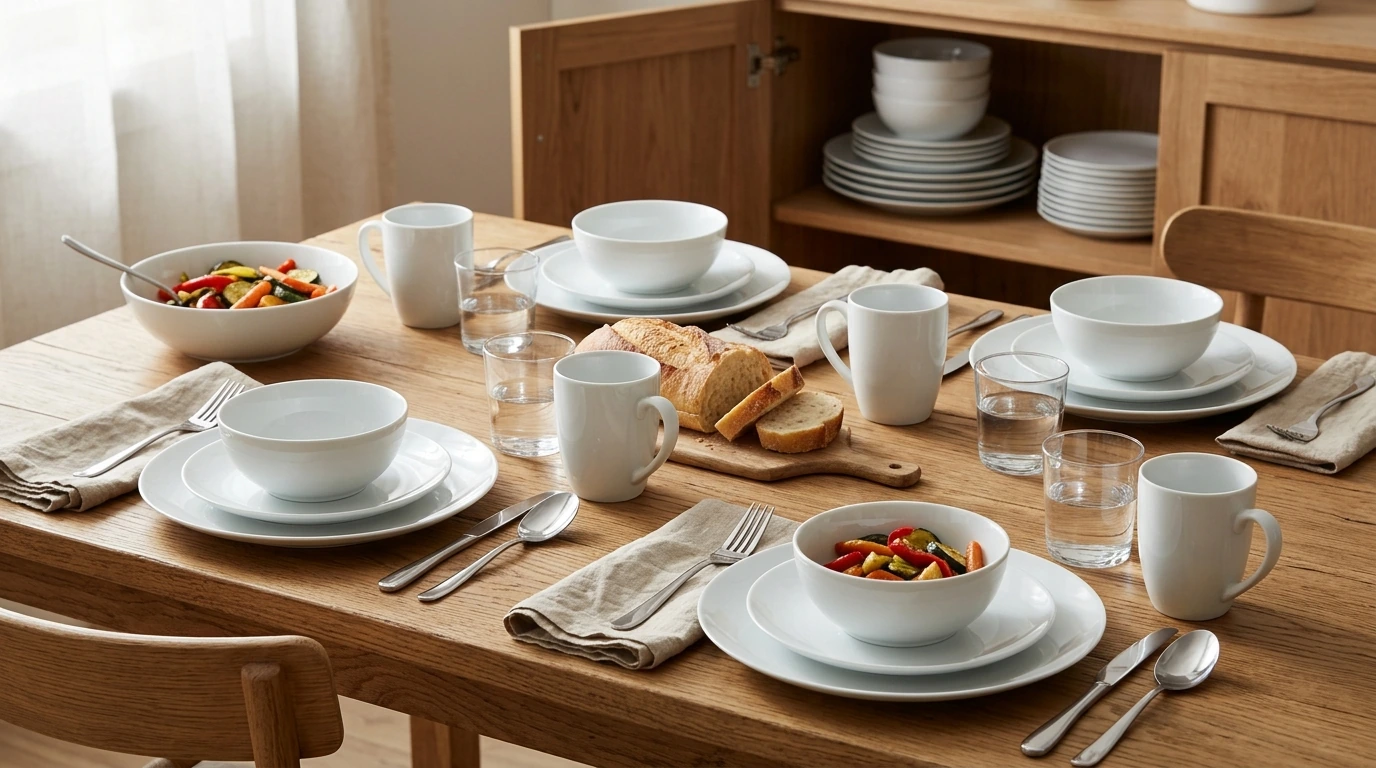
Porcelain Dinnerware Set for Everyday Meals and Special Occasions
A porcelain dinnerware set brings a clean, bright look to the table while staying practical for daily use. The right set should feel comfortable in the hand, stack neatly in cabinets, and hold up to repeated washing, reheating, and the occasional bump. The details that matter most come down to how porcelain is made, how pieces are sized, and what the manufacturer says about microwave, dishwasher, and oven use—so the set works for quick breakfasts and full-on hosting alike. For more guidance, see TheTerra Ceramic Dinnerware Set for 4, 12-Piece Plates and Bowls ….
Why Porcelain Works So Well for Dinnerware
Porcelain is a high-fired ceramic known for its density and smooth finish. Because it’s typically fired at higher temperatures than many everyday ceramics, it often ends up less porous, which helps it resist absorbing odors, oils, and stains over time. For further reading, see Modern Porcelain Dinnerware Set for 4 with Lipped Plates and Bowls.
Another perk is cleanup: a well-applied glaze creates a slick surface that releases sauces, coffee residue, and tea rings more easily. That same bright, crisp look—especially in white or soft neutrals—fits everything from weeknight bowls to holiday place settings without needing multiple sets. And compared with many stoneware options, porcelain often feels lighter and more refined in the hand while still being durable when properly made.
If you’re curious about porcelain’s origins and why it became a table classic, the Smithsonian’s overview of porcelain history is a great background read.
What’s Usually Included in a Dinnerware Set
Most porcelain dinnerware sets are built around the pieces used daily: dinner plates, salad (or dessert) plates, bowls, and mugs. Some collections expand into pasta bowls, cereal bowls, or coordinating serving platters and serving bowls—helpful if you like a matchy table, but not required for a functional starter set.
Place settings are commonly sold in 4, 8, or 12. For everyday use, a household of two often appreciates an 8-place setting so there’s room for guests and fewer “must-run-the-dishwasher-now” moments. If you host for holidays, 12 place settings can reduce last-minute mixing and matching.
Quick sizing guide for everyday use
| Piece | Comfortable everyday size | Notes |
|---|---|---|
| Dinner plate | 10.5–11.5 in | Fits most meals; larger plates can crowd standard cabinets and dishwashers |
| Salad/dessert plate | 8–9 in | Good for breakfast, sides, and snacks |
| All-purpose bowl | 22–32 oz | Versatile for cereal, soups, and grain bowls |
| Mug | 12–16 oz | Room for coffee/tea plus milk; check handle comfort |
Before buying, check the real dimensions (not just “large” or “oversized”). A plate that’s half an inch wider can be the difference between a neat stack and an awkward cabinet shuffle.
Choosing a Style That Stays Timeless
Neutral porcelain is popular for a reason: it highlights food, looks clean in photos, and pairs easily with wood boards, colorful glassware, or patterned linens. If you already own serving platters you love, a simple base set prevents clashes.
Pay attention to rim style. Wide rims read traditional and frame plated meals nicely, while coupe shapes (a smooth, rimless curve) feel modern and often stack efficiently. Finish matters, too: glossy looks crisp and tends to release stains more easily, while matte finishes can feel contemporary but may show utensil marks sooner.
Subtle details—beading, fluting, a soft embossed edge—add interest without locking your table into one seasonal theme.
Everyday Durability: Chips, Scratches, and Temperature Changes
Porcelain is strong, but it’s not indestructible. Chips most often happen at the edges, especially when plates knock together in a sink, bump a faucet, or rattle in an overloaded dishwasher. If you’ve had chipping issues in the past, prioritize sets that feel balanced (not overly thin at the rim) and stack evenly.
For frequently used stacks, a simple trick can reduce wear: place a soft liner between plates (felt, a thin cloth, or even a paper towel). This helps minimize friction and can reduce gray “metal marks” that come from utensils rubbing across glossy glaze.
Temperature changes matter, too. Unless the manufacturer specifically states freezer-to-oven safety, avoid drastic jumps (like taking a dish from the freezer straight into a hot oven). Rapid changes can stress the ceramic and lead to cracking over time.
For utensil marks that do show up, gentle cleaning usually works. A paste of baking soda and water can lift marks without aggressively scratching the surface.
Microwave, Dishwasher, and Oven Use: What to Verify
Porcelain often performs well in microwaves and dishwashers, but it depends on the exact glaze and decoration method. Always look for the set’s labeling.
Care and Storage for Long-Lasting Shine
A Simple Option to Refresh the Table
Shop In-Stock Picks
- Porcelain Dinnerware Set — a clean, coordinated foundation for everyday dining and hosting.
- Easy Holiday Potluck Bundle on a Budget – 3-in-1 Digital Download — helpful planning support for gatherings when you want the table (and the menu) to feel organized.
FAQ
Is porcelain dinnerware safe for microwaves and dishwashers?
Usually yes, but it depends on the specific set and any decorative trim. Confirm the manufacturer’s microwave/dishwasher-safe labeling, and never microwave pieces with metallic accents.
How do you prevent chips in porcelain plates and bowls?
Handle rims carefully, avoid banging stacks in the sink, and don’t overcrowd the dishwasher. Soft liners between frequently used plates can also reduce friction and edge-to-edge impact.
What’s the difference between porcelain and stoneware for everyday use?
Porcelain is typically denser and more refined in appearance, while stoneware is often heavier with a more rustic feel. Both can be durable, but real-world performance depends on firing temperature, glaze quality, and thickness.













Leave a comment